What is a deadbolt and how does it work?

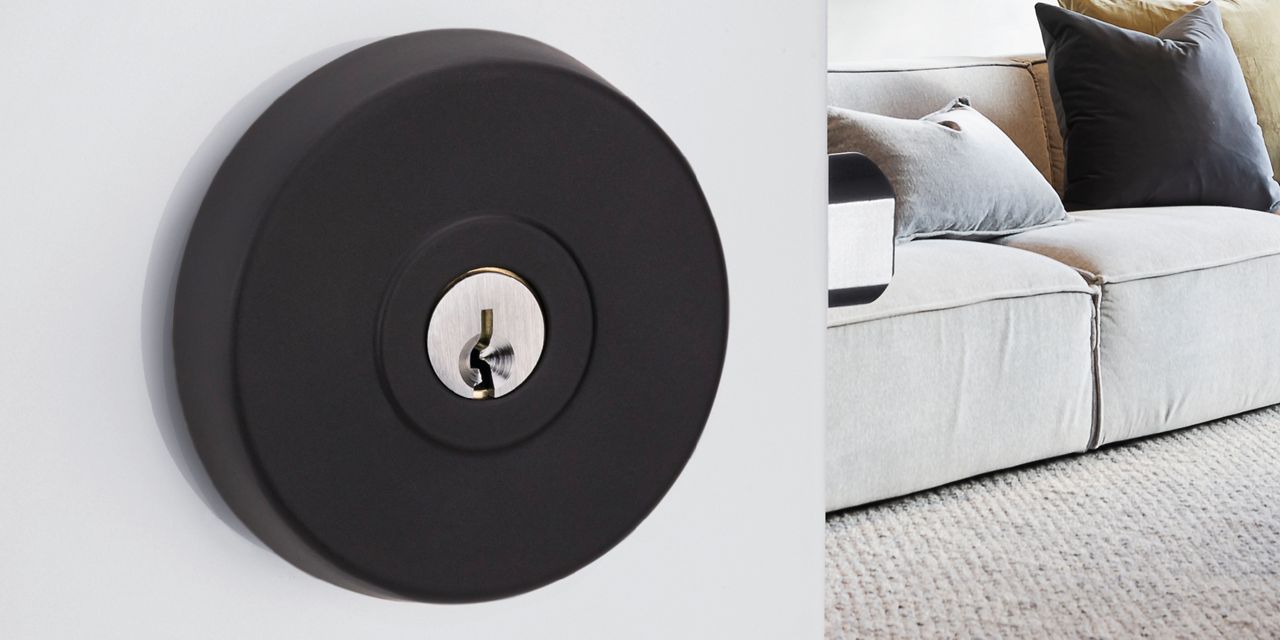
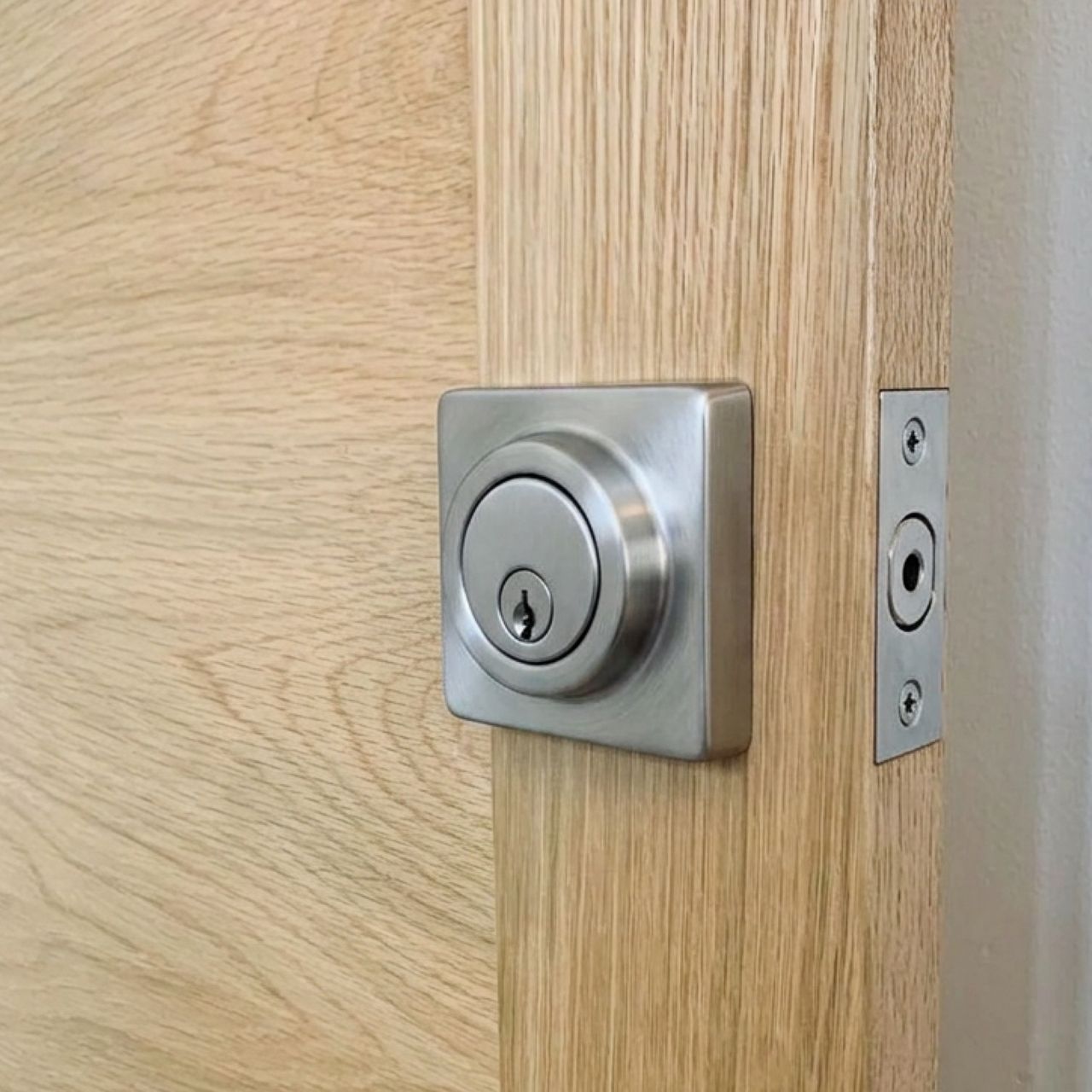
A deadbolt is a lock with a solid metal bolt that slides into the door frame and stays there until you deliberately move it with a key or a turn knob. Unlike an ordinary spring latch, a deadbolt has no spring driving the bolt, so it cannot be slipped or pushed back into the door once it is fully thrown. That fixed, immovable bolt is where the name comes from, and it is what makes the deadbolt the security workhorse on most front doors.
How does a deadbolt work?
Turning the key, or the turn knob on the inside, rotates the cylinder, which drives the bolt out of the lock body and into a strike plate fixed in the door frame. Unlike a spring latch, whose bevelled bolt is held by a spring and can simply be pushed back into the door — a deadbolt has nothing to retract the bolt, so pressure on the bolt alone won't move it. The only way to shift it is to operate the key or the knob, which is why a deadbolt resists being forced or jemmied far better than a spring latch. Across Lockwood's deadbolt range, the bolt is typically hardened or cut-resistant, so it stands up to attack as well as to daily use.
Most residential deadbolts fit a bored hole through the face of the door. Lockwood’s Symmetry® and Construct+ deadbolts retrofit a standard 54mm hole and take a 60mm to 70mm adjustable backset, the backset being the distance from the edge of the door to the centre of the hole. On both of those ranges the bolt throws 25mm into the frame. Because the backset adjusts and the hole size is standard, a new deadbolt usually replaces an old one without redrilling the door.
Deadbolt or latch: what is the difference?
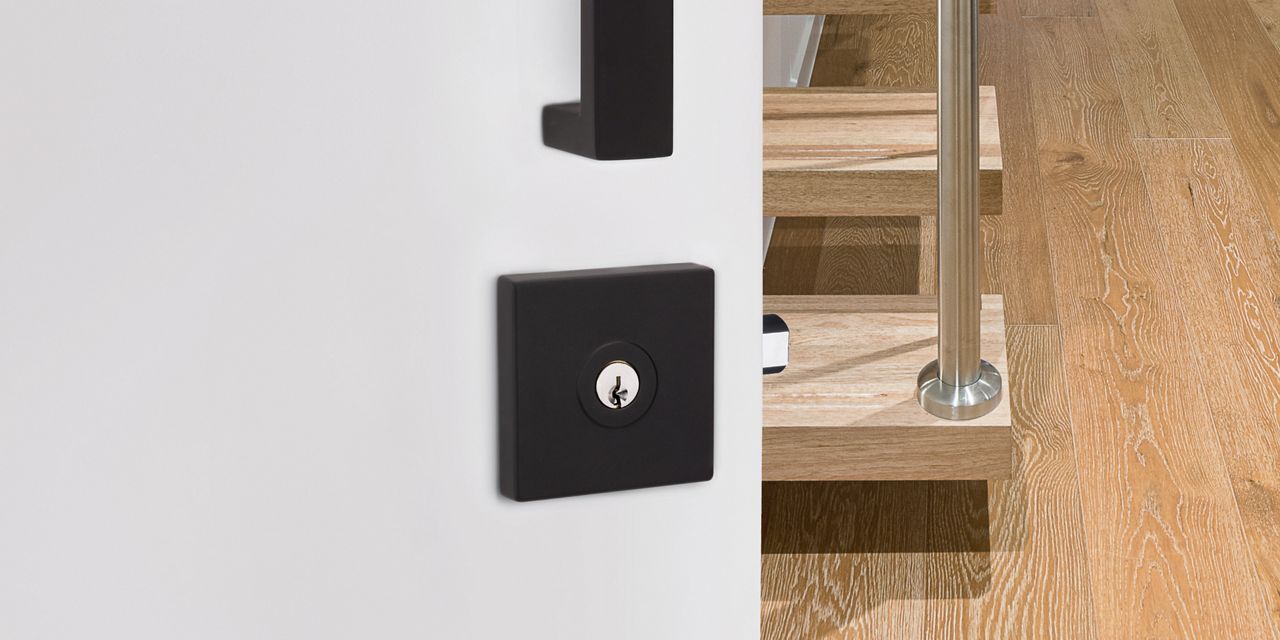
A latch holds a door closed. A deadbolt keeps it secure. A latch has an angled, spring-loaded bolt that snaps back into place on its own when you pull the door shut, which is what lets a door click closed without locking. A deadbolt has a square-ended bolt and no spring, so it moves only when you turn the key or knob, and it cannot be pushed back by hand or slipped with a card. In one sentence: a latch is about convenience; a deadbolt is about security.
That is why many entry doors use both. A latch built into the handle keeps the door shut through the day, and a deadbolt fitted above it adds a second, dedicated layer of security. For this reason, a deadbolt often serves as an auxiliary lock. Lockwood notes that a single cylinder Symmetry deadbolt is best paired with a key-in-knob or key-in-lever lockset for the strongest result. That said, a latch isn't always just a latch — a dead-latching pin can lock the bolt so it can't be forced back, which is how a well-designed latch set provides security on its own.
What are the types of deadbolts?
Deadbolts are grouped by how they operate from each side of the door: single cylinder and double cylinder.
Single cylinder deadbolt
A single cylinder deadbolt takes a key on the outside and has a turn knob on the inside, so you can lock and unlock it from indoors without a key. It is the most common choice for homes. The Symmetry 7106 single cylinder deadbolt is a general-purpose example, with a solid brass bolt and the option to be keyed alike so one key works several locks around the home.
Double cylinder deadbolt
A double cylinder deadbolt adds a key cylinder on the inside as well as the outside, so the door can be locked with a key from both sides. In its simplest form it has no free turning inside knob, which is why it is often chosen for doors with glass panels nearby: there is no thumbturn for someone to reach through a broken pane and turn. The Symmetry 7107 double cylinder deadbolt works this way. As general guidance rather than a product specification, before installing any lock that is keyed on both sides, check your local building and fire-safety requirements. Double-cylinder locks are restricted in some areas because they can slow escape in an emergency. Where they are permitted, keep a key within easy reach of the household, though never left in the lock itself, so occupants can open the door quickly from the inside when needed.
Some deadbolts give you the convenience and the security together. The Paradigm® 005 deadbolt has an inside turn knob with selectable modes through its DualSelect® system: a Safety mode that locks the outside while leaving the inside free to open by knob, a Secure mode that locks both sides for when nobody is home, and a Passage mode that leaves the door open both ways. Its SafetyRelease™ feature also frees the inside knob automatically when a key is used from outside, which reduces the chance of being locked in.
Beyond single and double cylinder, deadbolts also vary in form and style. They come in round and square roses and in traditional or contemporary looks, and some are built into a pull handle or made to self-latch. The Construct+ range, for instance, offers three styles: Adoni contemporary round, Casa contemporary square, and Arlo traditional round.
Deadlatch or deadlock: where does a deadbolt sit?
The quick answer is that a deadlatch locks itself when you close the door, while a deadlock does not. Both can deadlock, meaning the bolt cannot be pushed back once it is engaged, but they differ in how the bolt is thrown. These two are usually rim locks, mounted on the inside face of the door rather than bored through it.
Deadlatch
A deadlatch combines the two ideas. It has a latch that springs closed automatically as the door shuts, and it deadlocks that latch so it cannot be slipped. You get the convenience of a self-latching door with the security of a bolt that holds. The 001 double cylinder deadlatch is a surface-mounted example that latches the moment the door is pulled to.
Deadlock
A deadlock has a bolt that moves only when you turn the key or knob. Closing the door does nothing on its own, so you lock it deliberately, every time. The 355 deadlock is a double cylinder rim deadlock, keyed from both sides, while the 303 is the single cylinder version operated by an external key.
And the deadbolt?
A deadbolt behaves like a deadlock. The bolt is thrown only by deliberate operation and there is no spring, but it is bored into the door rather than mounted on the surface. So, a deadbolt and a deadlock are close relatives in the way they work, and a deadlatch is the one that adds self-latching on top.
How secure is a deadbolt, and which one suits your home?
In Australia, lock security is measured against the standard AS4145.2-2008, which rates a lock for security level, durability, corrosion resistance and key security. The higher the grade, the tougher the lock. Choosing a deadbolt is mostly a question of how much security you want and how much you want to spend, since the way they work is much the same across the board.
If you are fitting out a new build or replacing a worn lock on a budget, the Construct+ deadbolt is Lockwood’s entry-level option. It comes in the three styles mentioned above, in single or double cylinder, retrofits the standard 54mm hole and carries a 10-year mechanical warranty.
For an accessible all-rounder, the Symmetry® deadbolt covers both single cylinder (7106) and double cylinder (7107) from the same body, with a solid brass bolt and a 25-year mechanical warranty.
At the top of the range, the Paradigm® 005 deadbolt is rated to AS4145.2-2008 at Security Level SL8, the highest residential security level, with D8 durability and C6 corrosion resistance. It adds the LockAlert® indicator, which shows briefly whether the door is locked, SafetyRelease™ on the inside to reduce the chance of a lockout, and DualSelect® mode switching for everyday convenience. It also carries the 25-year mechanical warranty.
Where to next?
A deadbolt is one part of a secure, easy-to-live-with entry, and it makes most sense understood alongside the locks it works with. From here, the natural next questions are how single and double cylinder compare for your door, how a deadbolt differs from a self-latching deadlatch, and what an AS4145 security level actually means in practice. Exploring those will help you match the right lock to the right door, so the front of your home does its job quietly and you can get on with everything else.
Related products
Lockwood Borelocks | Deadbolts
A Borelock Deadbolt is fitted via two holes which are bored, perpendicular to one another, into the door.Deadlatches, Nightlatches and Deadlocks
Lockwood Rimlocks are fitted by attaching the hardware directly to the surface of the door.

